
Escalade is Geneva’s annual celebration of the city’s successful defense against the Savoyard attack of 1602, marked each December (on the 12th) with traditions, legends and community events.
L’Escalade gets its name from the French word “escalade”, which means “scaling” or “climbing”. Keep reading to discover the story behind it.
A historic night in Geneva
Escalade commemorates the night of 11 to 12 December 1602, when the Duke of Savoy (sovereign state at the time, not yet part of France) attempted a surprise attack on Geneva. Soldiers advanced before dawn and tried to enter the city by climbing its fortified walls. The plan failed thanks to the vigilance of the city’s guards and the quick response of residents who raised the alarm and defended the city. Geneva’s victory became a strong symbol of independence and civic unity.
The attack itself is historically documented in Geneva’s archives. The broader events, the date and the Savoyard attempt are well established. Some individual stories linked to the night are part of local legend rather than verified fact.
Where Savoy is located today
The Duchy of Savoy was a historical state that covered an area now divided between modern Switzerland, France and Italy. The territory involved in the 1602 conflict corresponds mainly to what is today the French departments of Savoie and Haute-Savoie, in the Auvergne-Rhône-Alpes region of France, directly bordering Switzerland. This geographical context helps explain the long and intertwined history between Geneva and Savoy.
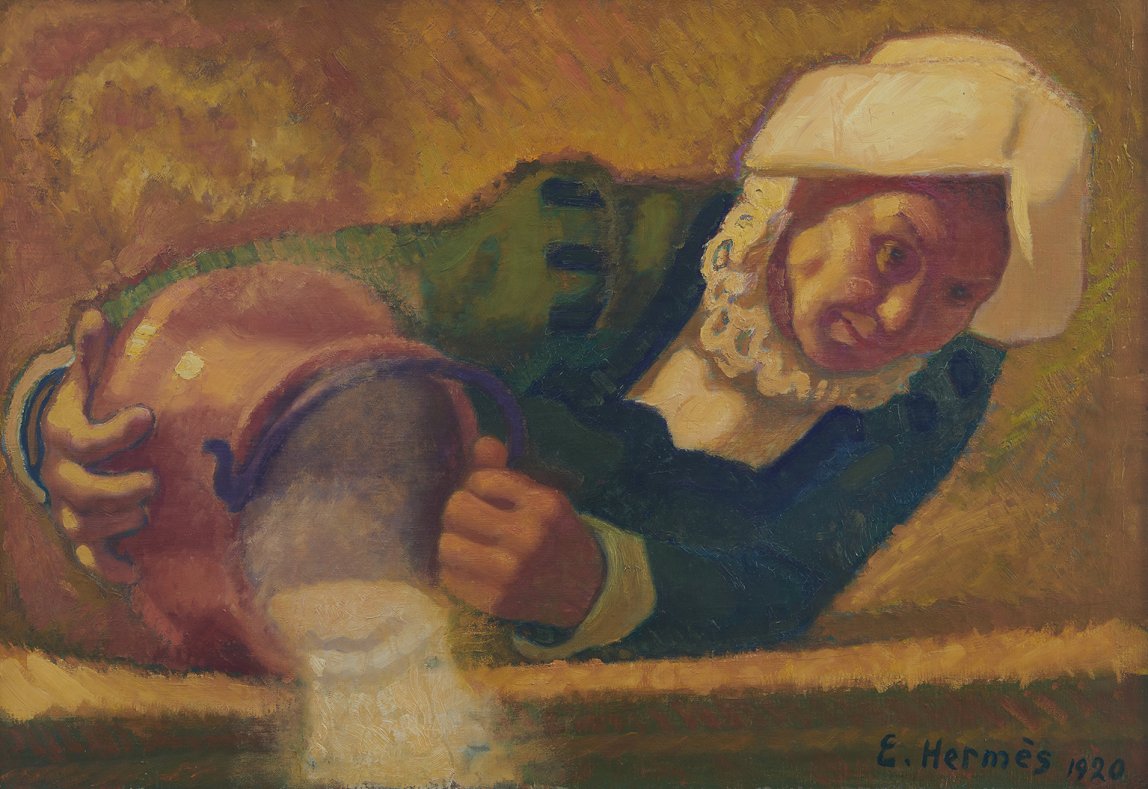
Photo credits: Musée d’Art et d’Histoire, Genève
The legend of Mère Royaume
Mère Catherine Cheynel, known as Mère Royaume, was a real inhabitant of Geneva. Originally from Lyon (France), she lived in the Saint-Gervais neighborhood at the time of the attack. Her presence in historical records is confirmed, although the famous story associated with her has taken on legendary form.
According to the tradition, she was preparing a pot of vegetable soup when she noticed a Savoyard soldier climbing a ladder near her window. She is said to have thrown her heavy cauldron down on him, which helped alert locals and contributed to defending the city. While historians agree that there is no documented proof of this exact act, the story became a powerful symbol of ordinary citizens’ courage. It is the reason why the cauldron remains central to Escalade celebrations.
Escalade in Geneva’s schools
In primary schools across Geneva, Escalade is an opportunity to introduce children to a key moment in the city’s history. Classes often prepare a simple vegetable soup inspired by the Mère Royaume story. The tradition is that each schoolchild brings a few pre-cut vegetables to add to the soup, which is later shared for lunch among everyone. Schools may also organize small celebrations where children dress in costumes or learn songs and stories related to the event.
When I was in primary school, after school, we would go door-to-door in our costumes, and sing traditional Escalade chants in exchange for a few sweets or coins. At the time (2000-2010), Halloween was not widely celebrated in Geneva, so this was our own local equivalent.
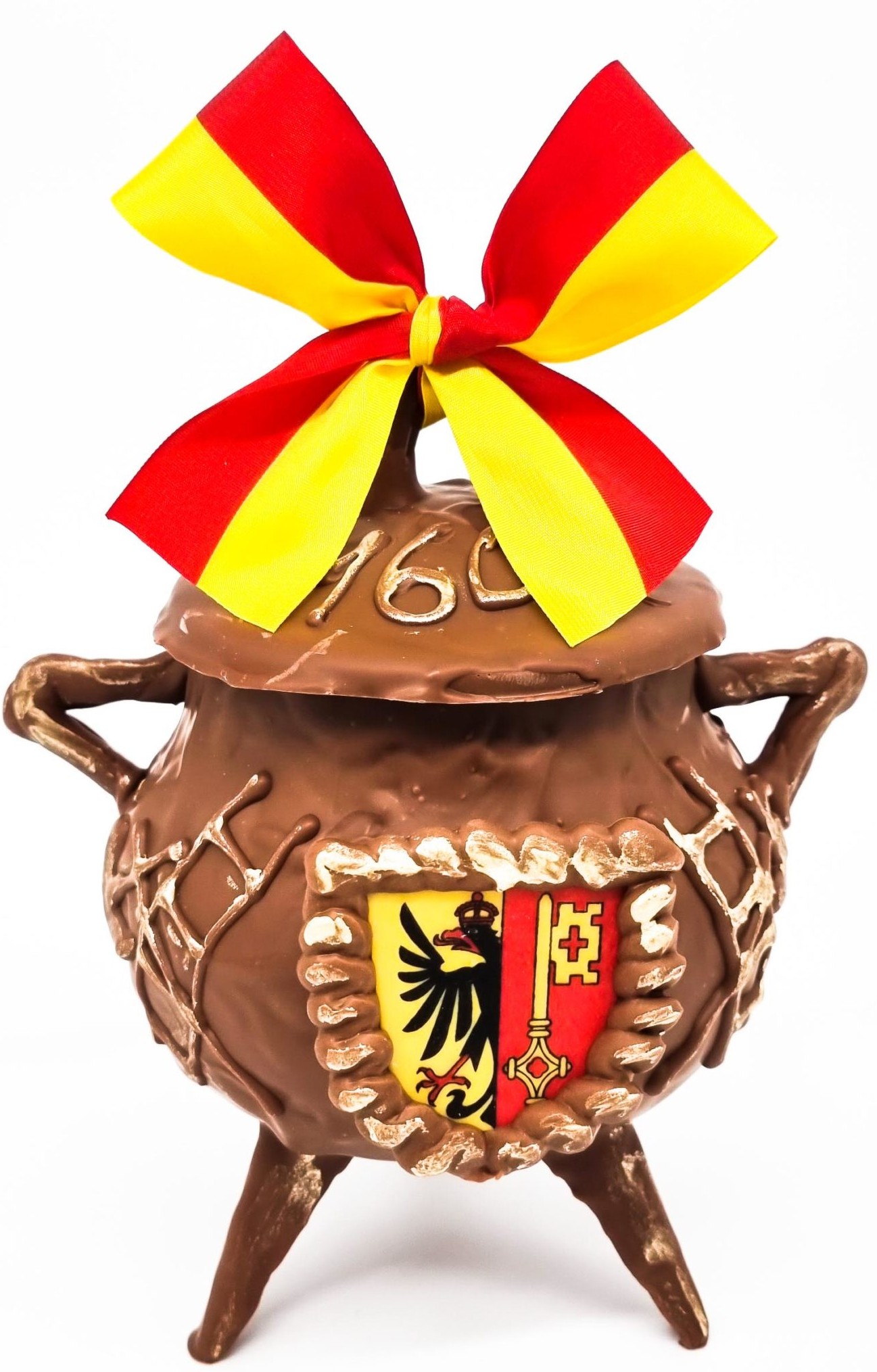
Photo credits: Chocolats Rohr SA
The chocolate cauldron tradition
The chocolate cauldron, or marmite en chocolat, is one of the most familiar traditions. Filled with marzipan vegetables to echo the soup legend, it is broken while reciting the phrase: “Ainsi périssent les ennemis de la République” (“Thus perish the enemies of the Republic”). Fun fact: back in 1602, Geneva was an independent republic, joining the Swiss Confederation in 1815.
The custom is that the youngest and the oldest person present hold their hands and break the cauldron together. Chocolatiers across Geneva produce a variety of cauldrons every year, making this moment a shared tradition in homes, workplaces and schools.
Events in the old town
The old town hosts a series of events known as the Cortège de l’Escalade, organized by the Compagnie de 1602. Historical reenactments, torchlit processions and period costumes bring the streets to life. Participants recreate scenes inspired by the events of 1602, and visitors can enjoy traditional food such as vegetable soup or mulled wine. The atmosphere is festive and rooted in local culture, offering a unique way to experience Geneva’s past.
The “Course de l’Escalade”
In addition to historical celebrations, Geneva hosts the Course de l’Escalade, a popular annual running event held in early December. The race welcomes thousands of participants of all ages, from serious runners to families and children. It typically covers several kilometers through the streets of the old town and nearby areas, combining sport with festive spirit. Many runners dress in costumes inspired by the Escalade legend, adding a playful and historical touch. The event highlights community participation and keeps the Escalade tradition alive in a modern, active way.
A celebration that brings Geneva together
Escalade remains one of the city’s most meaningful annual events. Blending verified history with beloved legends, school activities and community gatherings, the celebration keeps the memory of 1602 alive. Whether through the chocolate cauldron, the reenactments in the old town or the stories shared year after year, Escalade reflects Geneva’s identity and sense of resilience.
Get personalized guidance
Select an option above to learn more.
📅 Arrange a callback
Pick a TimeClick the button above to pick a time that suits you. I will call you to discuss your request and outline how I can best assist you, entirely without commitment.