If you live or work in Geneva, you may have noticed that everything suddenly slows down on a Thursday in early September. Shops close, offices are quiet, and the city feels more like a Sunday.
This day is known as the Jeûne genevois, which translates to “Geneva fast” or “Genevan day of fasting.” It is a public holiday observed only in the canton of Geneva and is part of the region’s long religious and cultural history.
While many residents enjoy the day off without thinking much about its origins, the tradition goes back several centuries.
When the Jeûne genevois takes place
The Jeûne genevois does not have a fixed calendar date. Instead, it always follows the same rule.
It is celebrated on the Thursday following the first Sunday of September. Because of this rule, the exact date changes every year, but it always falls during the first half of September.
This holiday applies only to the canton of Geneva. Other Swiss cantons observe a different fasting day later in the month known as the “Federal Day of Thanksgiving, Repentance and Prayer” (Jeûne fédéral ), which takes place on the third Sunday of September.
Why the holiday exists
The Jeûne genevois has its roots in the Protestant history of Geneva.
During the sixteenth century, Protestant cities often declared days of fasting in response to crises, conflicts, or religious events. These days were intended to encourage prayer, reflection, and solidarity within the community.
Geneva observed several such fasting days during the Reformation period. Over time, the tradition became established as a recurring local observance and eventually developed into the annual holiday known today as the Jeûne genevois.
During the nineteenth century, Geneva temporarily aligned with the federal fasting day celebrated across Switzerland. The canton later restored its own traditional observance, which remains in place today.
What people do today
Although the word “jeûne” means fasting in French, very few people actually fast on this day nowadays.
Instead, the holiday is generally treated as a quiet day off. Schools and many businesses are closed, and the city tends to be calmer than usual.
For many residents, it is simply an opportunity to relax, spend time outdoors, or enjoy the late summer weather.
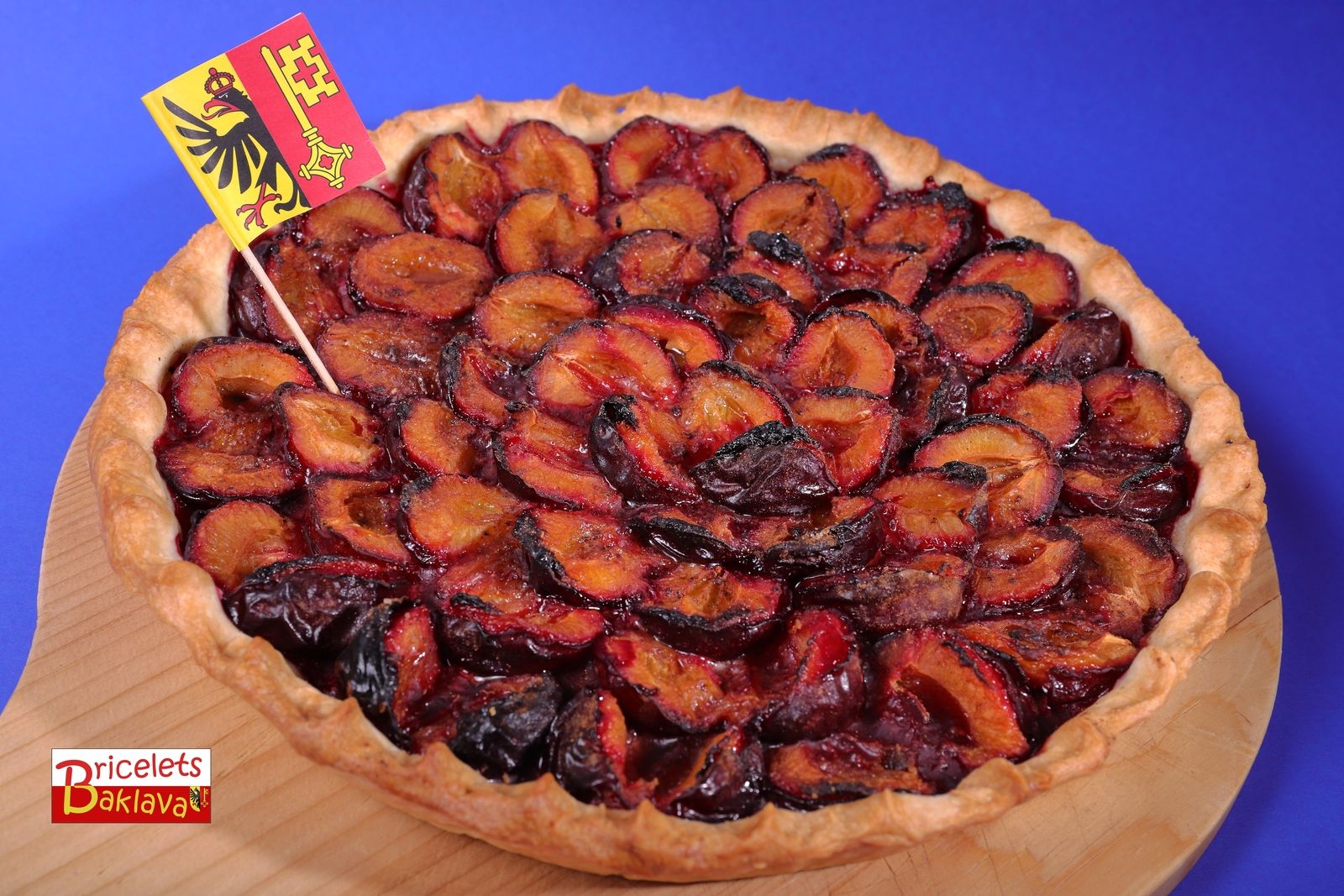
Photo credits: Bricelet & Baklava
The tradition of prune tart
One tradition that remains closely associated with the Jeûne genevois is the famous prune tart.
On this day, many people prepare or share a tarte aux pruneaux, a simple tart made with prunes and pastry. While bakeries across Geneva usually sell large numbers of these tarts before the holiday, it is also very common for families to make them at home.
The tart has become the symbolic dish of the holiday and is widely associated with the Jeûne genevois across the canton.
A uniquely Genevan holiday
Switzerland has many public holidays, but the Jeûne genevois remains one of the most locally specific traditions in the country.
It is observed only in the canton of Geneva and takes place earlier than the federal fasting day celebrated elsewhere in Switzerland.
For newcomers to the region, the quiet Thursday in early September can come as a surprise. Once you know about it, however, it becomes a small but distinctive part of life in Geneva, much like other local traditions such as “l’Escalade”.
Get personalized guidance
Select an option above to learn more.
📅 Arrange a callback
Pick a TimeClick the button above to pick a time that suits you. I will call you to discuss your request and outline how I can best assist you, entirely without commitment.